
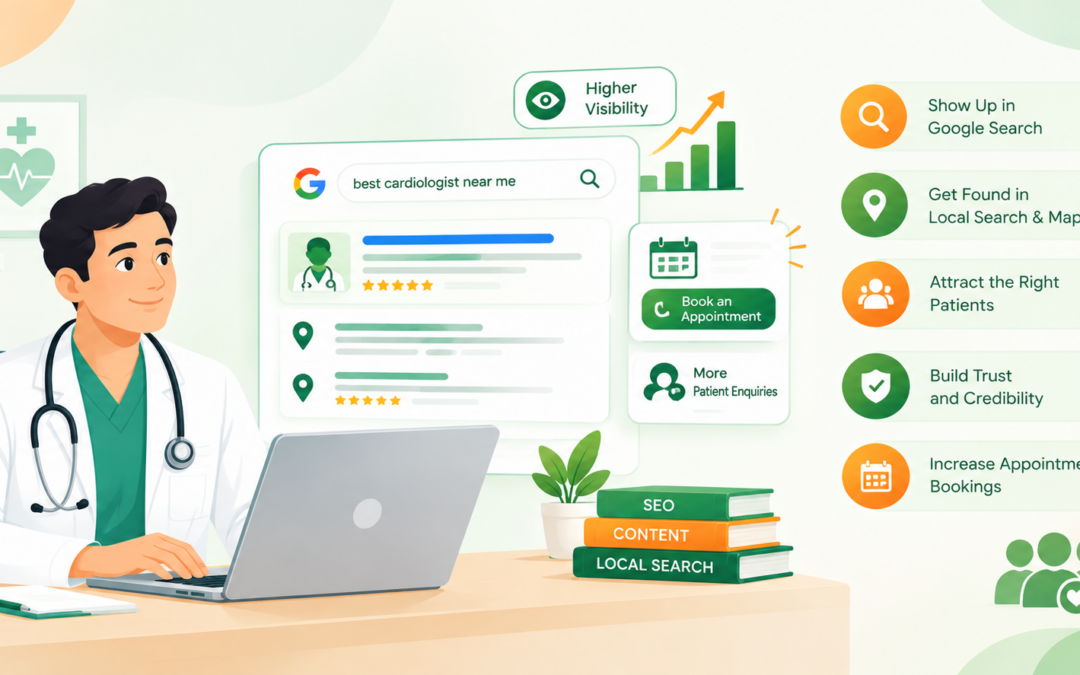
Today, many patients search online before choosing a doctor. They may look for a specialist near them, compare doctors, research symptoms, explore treatment options, or check a doctor's experience before making an appointment. For doctors and medical practices, having a credible online presence is therefore an important part of patient discovery.
Doctor SEO helps physicians and specialists improve their visibility when prospective patients search for relevant medical services, conditions, treatments, and expertise. But effective Doctor SEO is not simply about ranking a doctor website for keywords. Healthcare is a YMYL (Your Money or Your Life) category, so search optimization must be supported by accurate medical information, genuine expertise, trustworthy content, and a patient-focused website experience.
A strong strategy combines Doctor SEO, Medical SEO Strategy, Healthcare SEO Services, local search optimization, medical content strategy, E-E-A-T, healthcare website optimization, and AI Search Optimization to help the right patients discover the right information and take the next step.
- What Is Doctor SEO?
- Why Doctor SEO Matters for Patient Enquiries
- Build a Strong Doctor Profile Page
- Doctor SEO and E-E-A-T
- Create a Medical Content Strategy Around Patient Questions
- Match Doctor SEO With Patient Search Intent
- Local SEO Is Essential for Doctors
- Optimize Doctor SEO for AI Search
- Healthcare Website Optimization for Doctors
- Build Trust With Reviews and Professional Information
- Common Doctor SEO Mistakes to Avoid
- How Professional Doctor SEO Services Can Help
- How to Measure Doctor SEO Performance
- Conclusion: Build Doctor Visibility on Expertise and Trust
- Frequently Asked Questions
What Is Doctor SEO?
Doctor SEO is the process of optimizing a doctor's online presence so that patients can more easily discover the doctor through relevant search queries.
It can apply to:
- Individual doctors
- Medical specialists
- Surgeons
- Consultants
- Private practitioners
- Specialty clinics
- Doctors working within hospitals or healthcare organizations
Doctor SEO typically focuses on the doctor's expertise, specialty, location, services, conditions treated, procedures performed, and patient search intent.
For example, a urologist may need visibility for searches related to kidney stones, prostate conditions, urinary problems, urology procedures, and urologist consultations. A neurologist may need content around neurological conditions, symptoms, treatments, and specialist care.
The goal is to create a clear connection between the doctor's expertise, the patient's search, and the appropriate healthcare service.
Why Doctor SEO Matters for Patient Enquiries
Patients rarely search only for a doctor's name. Many begin with a problem or healthcare need.
They may search:
- Cardiologist near me
- Best urologist for kidney stones
- Neurologist in Mumbai
- Dermatologist for acne treatment
- Orthopedic doctor for knee pain
- Doctor for urinary problems
These searches demonstrate different levels of intent.
Someone searching for a symptom may still be researching, while someone searching for a specialist near them may be closer to booking an appointment.
A strong Doctor SEO Strategy helps a doctor's website address these different stages of the patient journey.
From Visibility to Appointment Intent
Search visibility becomes more valuable when the website gives prospective patients clear next steps.
A well-optimized doctor website should make it easy to understand:
- The doctor's specialty
- Qualifications and experience
- Conditions treated
- Treatments and procedures
- Hospital or clinic affiliations
- Practice locations
- Consultation information
- Contact and appointment options
Clear information reduces friction and helps patients make informed decisions about contacting the practice.
Build a Strong Doctor Profile Page
The doctor profile is often one of the most important pages on a medical website.
A strong profile should go beyond simply listing a name and specialty.
Where appropriate, include:
- Full professional name
- Medical qualifications
- Specialization
- Areas of clinical expertise
- Professional experience
- Relevant certifications
- Hospital or clinic affiliations
- Languages spoken
- Practice locations
- Consultation information
- Professional memberships
- Publications or research, where relevant
The information should be accurate, verifiable, and kept up to date.
Optimize the Profile Around Patient Needs
A doctor's profile should naturally explain what the doctor does and who they help.
For example, instead of presenting only a title such as "Consultant Urologist," the page can clearly describe areas of expertise such as urinary conditions, kidney stone management, prostate care, or relevant procedures—provided those services genuinely reflect the doctor's practice.
This creates useful context for both patients and search systems without turning the page into a list of keywords.
Doctor SEO and E-E-A-T
Because healthcare is a YMYL topic, E-E-A-T—Experience, Expertise, Authoritativeness, and Trustworthiness—is particularly important.
Demonstrate Genuine Expertise
Doctors should clearly communicate their professional qualifications and areas of expertise.
Relevant information may include:
- Medical degrees
- Specializations
- Fellowships
- Certifications
- Years of professional experience
- Areas of clinical practice
- Professional memberships
- Academic or research experience
Only genuine qualifications and experience should be presented.
Make Medical Content Trustworthy
If a doctor publishes educational content, the website should make it clear who created or reviewed the information.
Important healthcare articles can include:
- Author information
- Medical reviewer information
- Professional credentials
- Publication date
- Medical review or update date
- Relevant references
A transparent editorial process can help patients understand the credibility and context of medical information.
Create a Medical Content Strategy Around Patient Questions
A successful Medical Content Strategy should focus on questions patients genuinely ask rather than producing articles simply to target high-volume keywords.
Content opportunities can include:
Conditions and Symptoms
Explain common conditions, symptoms, risk factors, diagnosis, and when someone should consider consulting a healthcare professional.
Treatments and Procedures
Create clear pages explaining what a treatment or procedure involves, who it may be appropriate for, and what patients should discuss with their healthcare provider.
Frequently Asked Questions
Answer practical questions patients may have before booking a consultation.
Specialist Education
Develop content around the doctor's area of expertise to demonstrate genuine subject knowledge and build Healthcare Topical Authority.
Medical information should be accurate, appropriately sourced, and reviewed where necessary. It should not promise specific outcomes or replace personalized medical advice.
Match Doctor SEO With Patient Search Intent
Different searches require different types of content.
Informational Searches
Examples include:
- What causes kidney stones?
- What are migraine symptoms?
- When should I see a dermatologist?
Educational articles and condition resources can address these searches.
Treatment Searches
Examples include:
- Kidney stone treatment
- Cataract surgery options
- Acne treatment by dermatologist
Dedicated treatment and service pages can provide more relevant information.
Appointment Searches
Examples include:
- Urologist near me
- Book cardiologist appointment
- Neurologist in Mumbai
Doctor profile pages, local SEO, clinic pages, and clear appointment calls to action are important for these high-intent searches.
A strong Doctor SEO strategy connects these different content types rather than expecting one page to rank for every patient query.
Local SEO Is Essential for Doctors
Healthcare is often location-specific. Patients usually want to visit a doctor at a clinic, hospital, or consultation centre they can access conveniently.
This makes Local SEO for Doctors an important part of Doctor SEO.
Key areas include:
- Google Business Profile optimization
- Accurate practice name and address
- Correct phone number
- Appropriate primary and secondary categories
- Updated services
- Practice hours
- Location-specific website content
- Authentic patient reviews
- Consistent business information
A doctor's website and local business information should remain consistent across important online platforms.
Build Genuine Local Relevance
Location pages should provide useful information rather than simply repeating a city name.
A strong location page can explain the doctor's practice location, available services, nearby facilities, consultation details, and relevant patient information.
This provides genuine value while supporting local search visibility.
Optimize Doctor SEO for AI Search
The way people discover healthcare information is evolving.
Google AI Overviews, AI Mode, ChatGPT, Gemini, Perplexity, and other AI-powered experiences can synthesize information from different online sources.
This makes AI Search Optimization for Doctors increasingly relevant.
Doctor websites should provide information that is:
- Clear
- Structured
- Accurate
- Contextually complete
- Professionally supported
- Consistent across relevant online properties
- Easy for search systems to interpret
Clearly structured doctor profiles, specialty information, treatment pages, FAQs, credentials, and supporting content can help establish stronger entity-level context.
However, doctors and medical practices should avoid claims that SEO can guarantee visibility in a particular AI-generated response or citation.
The objective is to build a trustworthy and understandable online presence.
Healthcare Website Optimization for Doctors
Even excellent medical content may underperform if the website provides a poor user experience.
Important Healthcare Website Optimization areas include:
Mobile-Friendly Design
Patients frequently search for doctors from smartphones. The website should be easy to navigate and use on smaller screens.
Fast Page Experience
Important pages should load efficiently, particularly doctor profiles, service pages, contact pages, and appointment pages.
Simple Navigation
Patients should be able to move easily between:
Doctor Profile → Specialty → Condition/Treatment → Location → Appointment
Strong Internal Linking
Connect relevant pages naturally.
For example, a doctor profile can link to specialty services, condition pages, treatment information, clinic locations, and appointment options.
Technical SEO
Address issues such as indexing, crawlability, broken links, duplicate content, canonicalization, page experience, and other technical factors that may affect search visibility.
Build Trust With Reviews and Professional Information
Reviews can influence how prospective patients evaluate doctors, particularly when choosing among local providers.
Doctors should focus on providing a good patient experience and making it easy for patients to leave authentic feedback where appropriate.
Reviews should never be manipulated or fabricated.
Alongside reviews, websites should provide accurate information about:
- Professional credentials
- Clinic or hospital affiliations
- Areas of expertise
- Practice locations
- Consultation details
Together, these elements provide patients with a clearer picture of the healthcare professional.
Common Doctor SEO Mistakes to Avoid
Doctors and medical practices should avoid several common SEO mistakes:
- Creating thin doctor profile pages
- Overusing medical keywords
- Publishing unreviewed or outdated medical information
- Making unsupported treatment claims
- Hiding professional credentials
- Creating duplicate location pages
- Ignoring Google Business Profile optimization
- Using fake or manipulated reviews
- Neglecting mobile usability
- Focusing exclusively on rankings
- Promising guaranteed AI search visibility
- Publishing content without a clear purpose for patients
Doctor SEO should strengthen trust, not compromise it for short-term search visibility.
How Professional Doctor SEO Services Can Help
Professional Doctor SEO Services can bring together technical SEO, medical content, local optimization, E-E-A-T, and AI search preparation.
A practical strategy can include:
The exact approach should be customized to the doctor's specialty, location, services, competition, website, and patient audience.
How to Measure Doctor SEO Performance
Rankings are useful, but they are not the only indicators of success.
Relevant metrics include:
- Organic website traffic
- Non-branded search visibility
- Doctor profile visits
- Specialty page engagement
- Local search interactions
- Google Business Profile activity
- Appointment enquiries
- Contact form submissions
- Organic phone calls
- Conversion rates from high-intent pages
The most useful measurement framework connects search performance with meaningful patient actions.
Conclusion: Build Doctor Visibility on Expertise and Trust
Doctor SEO is more than optimizing a doctor's website for keywords. It is about building a credible digital presence that helps patients discover the right medical professional, understand their expertise, and find relevant healthcare information.
A strong strategy combines Medical SEO Strategy, Healthcare SEO Services, E-E-A-T, YMYL best practices, Local SEO, Medical Content Strategy, Healthcare Topical Authority, Healthcare Website Optimization, and AI Search Optimization.
For doctors, genuine expertise should remain at the centre of the strategy. Accurate credentials, medically responsible content, trustworthy information, authentic reviews, clear services, and a frictionless patient journey create a stronger foundation than search optimization alone.
When SEO supports real medical expertise and a patient-first experience, doctors can build sustainable search visibility while making it easier for relevant patients to discover and contact their practice.
Frequently Asked Questions
1. What is Doctor SEO?
Doctor SEO is the process of improving a doctor's online visibility for relevant searches involving their specialty, services, conditions, treatments, location, and professional expertise. It can include doctor profile optimization, medical content, local SEO, technical SEO, E-E-A-T, and AI Search Optimization.
2. Why is Doctor SEO important for patient enquiries?
Patients often use search engines to find doctors, compare specialists, research medical conditions, and locate nearby practices. A well-optimized online presence can help relevant patients discover a doctor's expertise, services, location, and appointment information.
3. How can doctors improve E-E-A-T?
Doctors can strengthen E-E-A-T by accurately presenting their qualifications, professional experience, specialties, affiliations, and areas of expertise. Medical content should also identify appropriate authors or reviewers, use reliable sources where necessary, and remain accurate and updated.
4. What keywords should doctors target?
Doctors should target keywords relevant to their actual specialty, services, treatments, conditions, and locations. Instead of focusing only on broad terms such as "doctor," a specialist may target searches related to their medical specialty, treatment areas, patient questions, and location-specific intent.
5. Can Doctor SEO help with Google AI Overviews and ChatGPT?
A strong Doctor SEO strategy can improve the clarity, structure, authority, and accessibility of information that search engines and AI-powered systems may use. However, no SEO provider can guarantee that a doctor will appear in a specific Google AI Overview, ChatGPT response, or other AI-generated result.
6. How long does Doctor SEO take to produce results?
The timeframe varies depending on the website's existing authority, competition, technical condition, location, content quality, and search demand. Some improvements can appear relatively quickly, while sustainable organic visibility and patient enquiry growth generally require ongoing optimization and content development.